Searching for the best agentic AI course? Build a working agent instead
August 2, 2026
Stop watching theoretical lectures. The best way to learn agentic AI is to build a working agent, connect live data, and ship a real business asset.
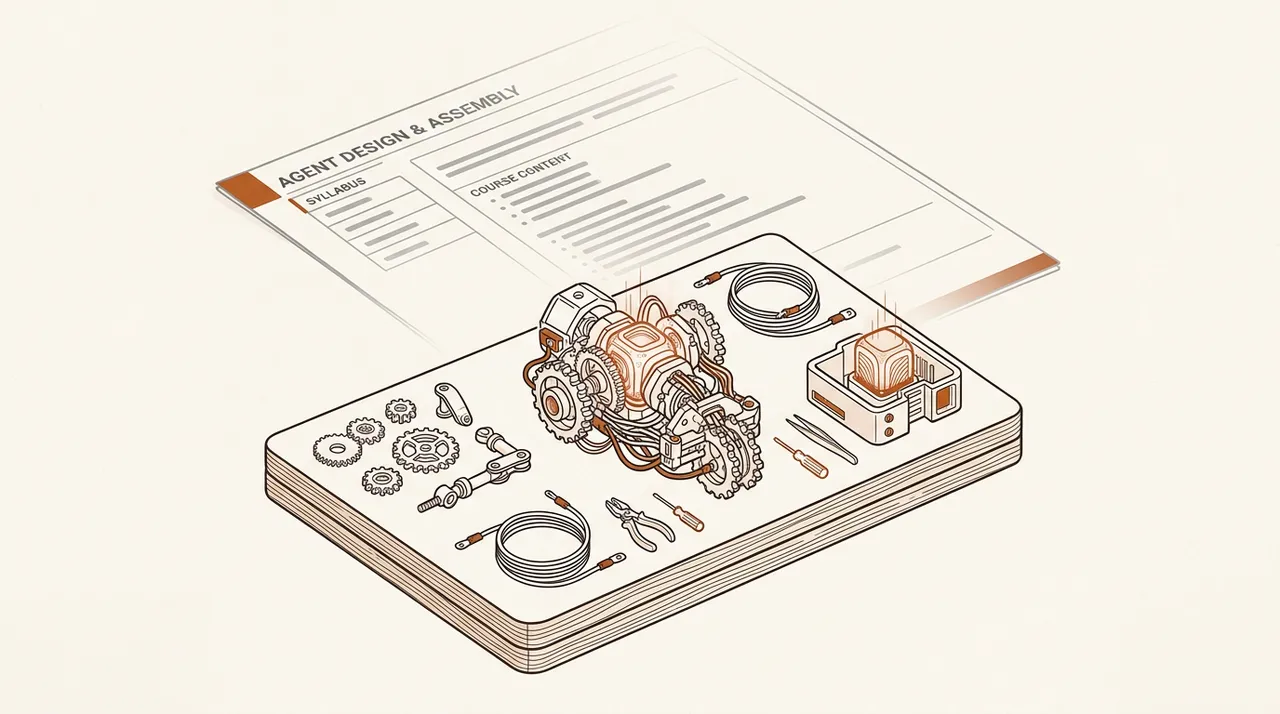
Most people looking for the best agentic AI course are actually trying to find a prompt that magically turns ChatGPT into a fully autonomous worker. They end up stuck in a loop of buying theoretical video courses that explain terminology instead of showing you how to wire up real tools.
A theoretical framework will not automate your busywork. You learn agentic AI by manipulating the actual tools, connecting them to real data sources, and managing where they inevitably break.
Here is how we approach this practically.
What are you actually trying to get done?
If you are a working professional, you do not need to understand the math behind large language models. You need to save time. You are likely trying to automate a specific workflow: researching a market, organizing messy documents, or drafting routine communications.
The fundamental error is treating AI tools like simple search engines. Agentic AI in mid-2026 means giving the model a job, a context window, and the ability to use tools or run code to finish a multi-step task. It is messy, requires strict instructions, and breaks often.
The best agentic AI course for beginners is not one that teaches you to code an agent from scratch in Python. It is one that teaches you how to use the native tool-use features already built into tools like Claude to ship a real project.
How do you actually build an AI agent in practice?
Building a functional agent requires a repeatable process. Forget vague advice about "thinking step by step". You need mechanical steps.
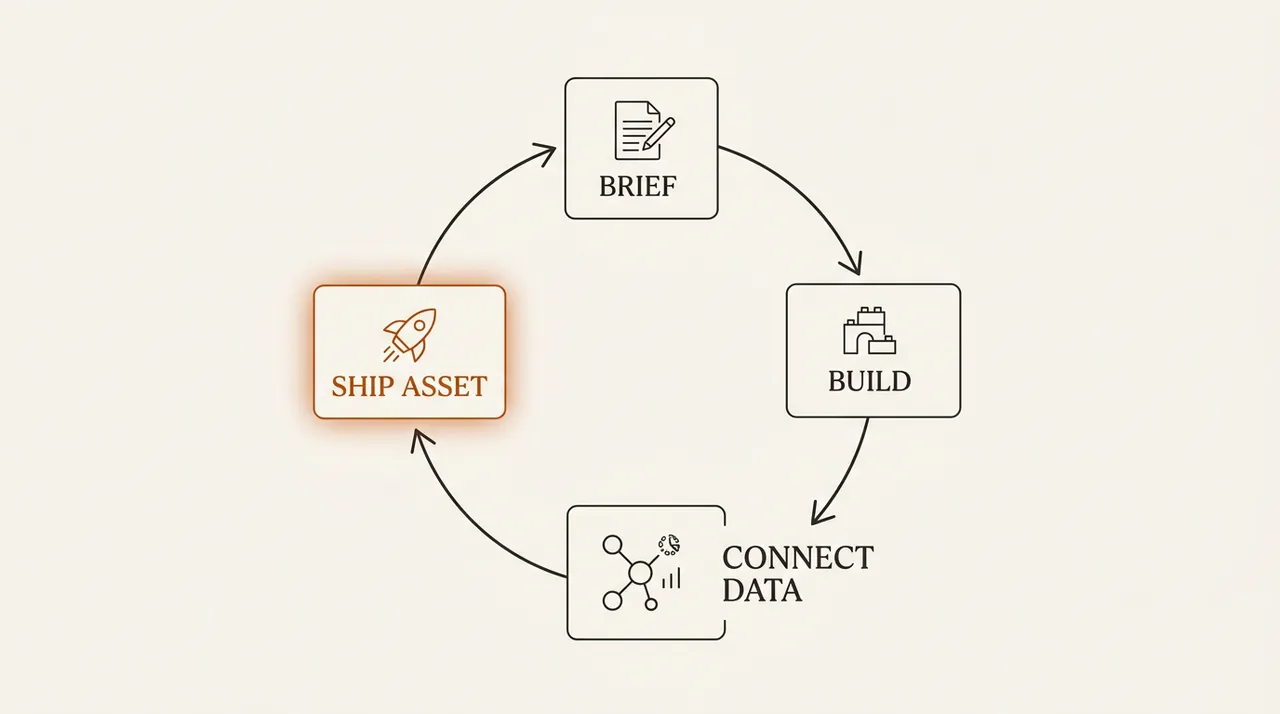
- Define the asset. Decide exactly what you want the agent to produce at the end of the run. A formatted report, a spreadsheet, or a cleaned data set are good starting points.
- Connect real data. An agent is useless without context. As of mid-2026, tools like Claude allow you to connect live data sources directly to the chat interface.
- Enable tool use. You need to explicitly tell the AI it can use external tools or run code to manipulate your data, rather than just talking about it.
- Ship the business asset. Test the output, fix the prompt, and put the result into actual use at your job.
This is exactly how our flagship Claude: Deep Dive course is structured. It is a 180-minute practical walkthrough that tasks you with a capstone project. You connect a live data source, build an artifact, run a coding task, and ship one business asset. This is the only way to learn without wasting time on theory.
Should you just find a free agentic AI course online?
It is tempting to search for an agentic AI course free with certificate. Platforms like Google, IBM, and various providers on Udemy offer video overviews that explain the landscape.
The problem is that AI interfaces change every few weeks [1]. A free course recorded months in advance already shows out-of-date buttons, menus, and plan limits by the time you watch it.
“A video explaining how agents *should* work in theory does not help you when the live interface changes. You need to learn the underlying mechanics.”
Our entire methodology at Classwise is built around this reality. Every lesson is written against the live product it teaches. We verify real buttons, menus, and plan limits, and re-verify them every 90 days. You can read or listen to these short lessons in a few minutes, and you earn certificates with public verification URLs.
You can access our entire catalog of 19 courses, including courses on Claude Code and Perplexity, for $19 a month or $149 a year. You can cancel anytime with one tap through our self-serve refund process.
Where this approach breaks down
Following a practical, tool-first approach will not turn you into a machine learning engineer. This methodology does not teach you how to train, fine-tune, or deploy your own open-source models. We assume you are a non-technical professional who wants to use existing commercial tools to get work done faster.
If you need to build secure, autonomous backend infrastructure for an enterprise software product, a consumer-focused course on prompt structuring will not get you there. You will eventually need developer documentation and a background in software engineering. We focus strictly on practical, daily business operations.
Frequently asked questions
What is agentic AI?
Agentic AI receives a goal, plans steps, uses tools or writes code, and completes multi-step tasks with minimal human intervention. It differs from chatbot use because the AI takes action rather than just answering questions.
Can beginners learn agentic AI without coding?
Yes. As of mid-2026, tools like Claude and ChatGPT have built-in features that let non-technical users build functional agents without writing Python. You need to understand how to instruct the tool and connect data sources.
How long does it take to learn agentic AI?
You can ship your first working agent in a few hours with a practical approach. Our Claude: Deep Dive course takes about 180 minutes, including a capstone project.
What makes a good agentic AI course different from a prompt engineering course?
Prompt engineering teaches you to write better instructions. Agentic AI teaches you to give the AI a job, connect it to real data, and let it complete multi-step tasks on its own.
If you want to stop theorizing and start building, the Claude: Deep Dive course walks you through that exact capstone project. If you are still deciding what kind of training fits your role, our guide to online AI classes for professionals maps the course formats to the specific jobs they support. You might also find our comparison on Claude vs ChatGPT for business helpful for choosing your primary tool. To see the full catalog of 19 courses, visit /courses.
References
[1] OpenAI model release notes, July 2026. GPT-5.6 Sol launched with updated interface behaviors, confirming the pace of change in AI tool surfaces.